

Table of Contents
- What Determines the Cost of High Quality Research Peptides
- Purity Levels and HPLC Testing: Why Analytical Standards Drive Price
- Buying Research Grade Peptides Online: What to Expect Across Price Ranges
- Third-Party Testing for Research Peptides: Cost-Benefit Analysis
- Custom Peptide Synthesis Pricing: Catalog vs. Bespoke Compounds
- Calculating Cost Per Milligram and Volume Discounts
- Conclusion: Making Informed Peptide Purchasing Decisions
- Frequently Asked Questions
Last Updated: September 29, 2026
What Determines the Cost of High Quality Research Peptides
The cost of high quality research peptides varies based on purity, synthesis method, batch size, and testing rigor. Understanding these drivers separates informed buyers from those chasing the lowest price.
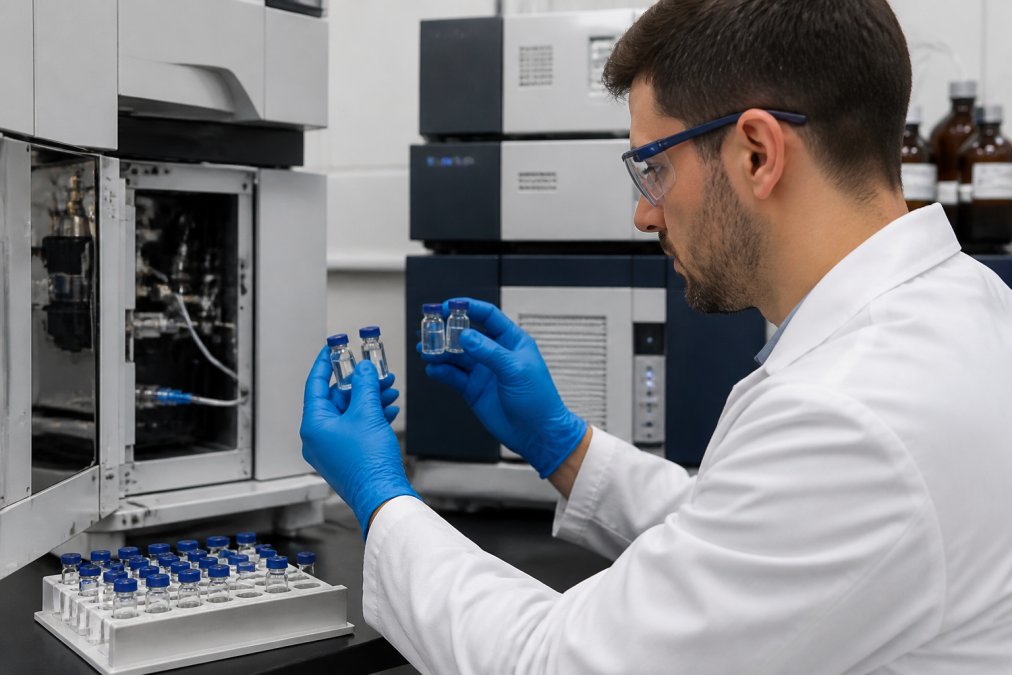
Purity levels represent the largest cost driver. A 95% pure peptide costs significantly less than 99%+ purity because higher purity requires additional purification cycles and rigorous testing. The difference between 98% and 99.5% purity adds measurable expense through extra analytical verification.
Custom synthesis costs more than catalog products because you're paying for dedicated synthesis time and equipment validation. Catalog peptides distribute manufacturing costs across multiple orders.
Batch size influences unit cost dramatically. Ordering 500 milligrams costs far less per milligram than 10 milligrams because fixed costs are distributed across larger quantities.
Third-party testing through HPLC and mass spectrometry provides the certificate of analysis proving purity claims. Suppliers skipping this testing offer lower prices but provide no verification. Frontline Peptides includes third-party testing because researchers need verified purity data.
Purity Levels and HPLC Testing: Why Analytical Standards Drive Price
Research-grade purity standards directly determine cost. The difference between 95% and 98% purity often represents a 30-50% price increase because final purification steps require specialized equipment and repeated testing cycles.
HPLC testing measures the percentage of target peptide versus impurities. At 95% purity, 5% of the vial contains unwanted compounds; at 99%+ purity, impurities drop below 1%, reducing experimental noise and improving reproducibility.
Mass spectrometry confirms molecular weight and identifies contaminants. A certificate of analysis from Frontline Peptides includes HPLC purity data plus mass spectrometry confirmation of molecular structure, dual verification that ensures compound reliability.
Clinical-grade peptides demand higher standards than research-grade compounds. GLP compliance for pharmaceutical submissions requires documented protocols and extensive batch documentation, reflected in premium pricing.
Buying lower-purity peptides to save money often backfires. Contamination that invalidates results wastes months of research time and funding far exceeding peptide savings. Higher purity protects your experimental investment.
Buying Research Grade Peptides Online: What to Expect Across Price Ranges
Price variation reflects real differences in quality control, testing rigor, and supply chain reliability.
Budget suppliers offer 90-95% purity without third-party testing. These compounds work for preliminary screening but introduce variability that makes reproducibility difficult. Cost savings disappear when results require repeating.
Mid-range suppliers provide 95-98% purity with HPLC data, representing the sweet spot for academic labs. Frontline Peptides offers this tier with third-party testing that some competitors skip.
Premium suppliers charge for 98%+ purity and comprehensive testing. These compounds cost 2-3 times more but are necessary for maximum reproducibility or narrow therapeutic windows.
Custom synthesis pricing depends on peptide length and complexity. Longer chains require more synthesis cycles and purification. Modified residues also increase cost due to specialized chemistry.
The key question is "What quality level matches my research requirements?" A 95% pure peptide works for binding assays; 99.5% purity is necessary for dose-response curves where impurities could mask effects.
Third-Party Testing for Research Peptides: Cost-Benefit Analysis
Third-party testing adds 15-30% to peptide costs. Whether this is justified depends on how your research uses the compound.
Third-party testing means an independent laboratory analyzes your peptide using HPLC and mass spectrometry, providing a certificate of analysis documenting purity, molecular weight, and contaminants. This confirms supplier claims and documents what you're using.
The cost-benefit case is strongest for dose-response curves and pharmacokinetic studies where impurities become noise. Third-party testing eliminates this variable.
For preliminary screening, 95% pure material from a reputable supplier usually suffices because you're not establishing precise dose-response relationships.
Regulatory work demands third-party testing. Patent filings, FDA submissions, and pharmaceutical development require independent verification; suppliers' own testing data won't satisfy regulatory requirements.
According to FDA guidance on analytical procedures, verification of pharmaceutical compound purity through validated analytical methods is mandatory for any research intended to support regulatory submissions. This requirement alone justifies third-party testing costs when your work has regulatory implications.
Frontline Peptides includes third-party testing with all products, which means you're not choosing between tested and untested compounds, you're getting verified purity data as part of the standard offering. This removes the cost-benefit calculation entirely; the testing is built into pricing.
Custom Peptide Synthesis Pricing: Catalog vs. Bespoke Compounds
Custom synthesis pricing follows a simple principle: you pay for dedicated manufacturing time and specialized chemistry. Catalog products, peptides Frontline Peptides manufactures regularly, cost substantially less because synthesis and purification are simplified through repetition.
Catalog peptides like GLP-1SM Semaglutide and BPC-157 are manufactured in batches, with costs distributed across multiple orders. When you buy a catalog peptide, you're paying for your portion of that shared manufacturing run. This economics explains why catalog compounds cost 30-50% less than custom synthesis of the same peptide.
Bespoke synthesis, creating a peptide designed specifically for your research protocol, involves dedicated equipment time, custom purification protocols, and extensive documentation. A novel 20-amino-acid peptide with modified residues requires synthesis chemistry that differs from standard protocols. This customization costs money because the supplier can't amortize manufacturing expenses across multiple buyers.
Peptide length directly influences custom synthesis cost. A 5-amino-acid peptide requires fewer synthesis cycles than a 30-amino-acid compound. Each additional amino acid adds synthesis time, purification complexity, and analytical work. Doubling peptide length roughly doubles synthesis cost because the chemistry scales linearly with sequence length.
Modified amino acids (phosphorylated residues, fluorescent tags, non-standard components) add significant cost because they require specialized reagents and additional validation. A standard peptide uses the 20 naturally occurring amino acids; adding modifications means custom chemistry that suppliers charge premium rates for.
Minimum order quantities for custom synthesis typically start at 5-10 milligrams, which represents the smallest batch size suppliers can economically manufacture. Ordering less than this minimum often incurs surcharges because fixed costs (equipment setup, documentation) can't be distributed across smaller quantities.
The pricing structure for custom work usually follows this pattern: base synthesis cost (determined by peptide length and complexity) plus purification cost (determined by target purity level) plus analytical testing (HPLC, mass spectrometry, and documentation). A simple 10-amino-acid peptide at 95% purity costs less than a 25-amino-acid peptide with modified residues at 99% purity.
Calculating Cost Per Milligram and Volume Discounts
Cost per milligram is the standardized metric for comparing peptide pricing across suppliers and batch sizes. This calculation reveals whether you're getting a fair price relative to purity level and testing rigor.
To calculate cost per milligram, divide the total price by the milligram quantity. A 10-milligram vial priced at $40 costs $4 per milligram. The same peptide at 50 milligrams for $150 costs $3 per milligram, a 25% savings despite higher absolute cost. This metric accounts for the volume discounts that make larger orders more economical.
Volume discounts typically follow these patterns: 10-25 milligrams receives a small discount (5-10%); 50+ milligrams receives moderate discounts (15-25%); 100+ milligrams receives substantial discounts (30-50%).
Conclusion: Making Informed Peptide Purchasing Decisions
Buying research peptides requires balancing cost against quality specifications, testing rigor, and supply chain reliability. The lowest price rarely represents the best value because it often reflects corners cut in purification, testing, or documentation.
| Pricing Factor | Impact on Cost | When It Matters Most |
|---|---|---|
| Purity level (95% vs. 99%+) | 30-50% difference | Dose-response studies, pharmacokinetic work |
| Third-party testing | 15-30% premium | Regulatory submissions, published research |
| Custom vs. catalog synthesis | 30-50% difference | Novel peptides vs. standard compounds |
| Batch size (10mg vs. 100mg) | 25-40% savings | Larger orders, multi-year projects |
| Amino acid complexity | Variable cost | Modified residues, non-standard components |
| Lyophilized vs. liquid | 10-20% difference | Storage stability, handling requirements |
Frequently Asked Questions
Why does peptide purity affect the total cost of research?
Higher purity levels require more rigorous synthesis and analytical testing, including HPLC and mass spectrometry analysis. A 95% pure peptide costs significantly less than 99%+ purity because lower purity compounds need fewer purification steps and less comprehensive quality control. For research requiring reproducible results, higher purity minimizes contamination variables and reduces experimental noise, justifying the premium cost.
What should I look for in a certificate of analysis when buying research grade peptides online?
A complete certificate of analysis should include purity percentage (via HPLC), molecular weight confirmation (via mass spectrometry), batch number, synthesis date, storage conditions, and the testing methodology used. Verify that third-party testing was performed by an independent lab, not just the supplier. This documentation ensures the peptide meets your research specifications and allows you to compare pricing across vendors fairly.
How much does custom peptide synthesis pricing typically cost compared to catalog products?
Catalog research peptides generally cost $30-$50 per vial for standard compounds like BPC-157 or semaglutide. Custom synthesis pricing depends on sequence length, complexity, and purity requirements but typically ranges from $200-$1,000+ for small batches.
What's the difference between research-grade and clinical-grade peptides, and why is there a price difference?
Research-grade peptides meet analytical standards for in vitro studies but may have lower purity or less comprehensive documentation than clinical-grade compounds. Clinical-grade requires extensive batch consistency data and regulatory documentation, significantly increasing costs. Choose research-grade for exploratory work and academic studies; clinical-grade is necessary only for compounds intended for human trials or pharmaceutical development.