

Table of Contents
- What Makes Research Grade Peptides Legitimate
- Third-Party Tested Peptides: Why Independent Verification Is Non-Negotiable
- How to Read a Certificate of Analysis for Research Peptides
- Research Peptide Storage Guidelines That Protect Your Investment
- What to Look for When Buying Research Grade Peptides Online
- Custom Peptide Synthesis and GLP-Grade Documentation
- Frequently Asked Questions
Last Updated: August 30, 2026
Buying research grade peptides online is one of the most consequential procurement decisions a laboratory researcher can make, and also one of the most poorly understood. At Frontline Peptides, we've worked with independent researchers, academic labs, and pharma-adjacent teams long enough to know exactly where the process breaks down: not at checkout, but in the vetting that happens before it.
The market for synthetic peptides has expanded rapidly, and so has the number of suppliers willing to fill that demand. Product quality varies enormously, and a supplier's website rarely tells you what you actually need to know. This guide cuts through the noise. Below, we cover how to evaluate research-grade purity, read a Certificate of Analysis, verify third-party testing, store your compounds correctly, and identify suppliers worth trusting.
Quick Picks:
- Best for documentation and GLP compliance: Frontline Peptides, third-party tested, COA available, U.S.-based
- Best for custom synthesis: Suppliers offering sequence-specific peptide manufacturing with mass spectrometry confirmation
- Best for budget-constrained labs: Prioritize purity documentation over price, a failed assay costs more than a premium vial
What Makes Research Grade Peptides Legitimate
Research grade peptides are synthetic amino acid chains manufactured to a defined purity standard, intended exclusively for laboratory and scientific use. Legitimate research-grade compounds are not intended for human consumption, and suppliers operating responsibly make that distinction clear in their documentation and labeling.
The phrase "research grade" carries real meaning when it's backed by analytical data. Without a documented purity threshold, a lot number, and verifiable testing, it's a marketing label, nothing more.
Synthesis Methods and Why They Matter
Solid-phase peptide synthesis is the current standard for research-grade production because it allows precise control over peptide sequence assembly, supports scalability, and produces compounds that can be reliably characterized by mass spectrometry and HPLC.
The synthesis method directly affects batch consistency. A supplier using validated, standardized protocols will produce peptides with predictable molecular weight, defined purity levels, and stable lyophilized form, characteristics that matter enormously when your assay results need to be reproducible. Peptides produced through poorly controlled synthesis often contain truncated sequences or deletion products that only appear under high-resolution analytical testing.
Regulatory Landscape for Researchers
Research peptides occupy a specific regulatory position in the United States. The FDA does not regulate research-grade peptides as drugs when they are sold explicitly for laboratory and scientific use only and are not intended for human or veterinary use. However, the FDA's oversight of compounded peptides and bulk drug substances has expanded. Researchers sourcing peptides for any application touching human subjects should consult the FDA guidance on bulk drug substances used in compounding before procurement.
For academic and independent researchers, your institutional review board and your institution's purchasing policies may impose additional requirements on top of what suppliers document. Confirm your compliance obligations before placing an order.
Third-Party Tested Peptides: Why Independent Verification Is Non-Negotiable
Third-party tested peptides are compounds whose purity and identity have been verified by an independent laboratory with no financial stake in the outcome. This is the single most important quality signal when buying research grade peptides online.
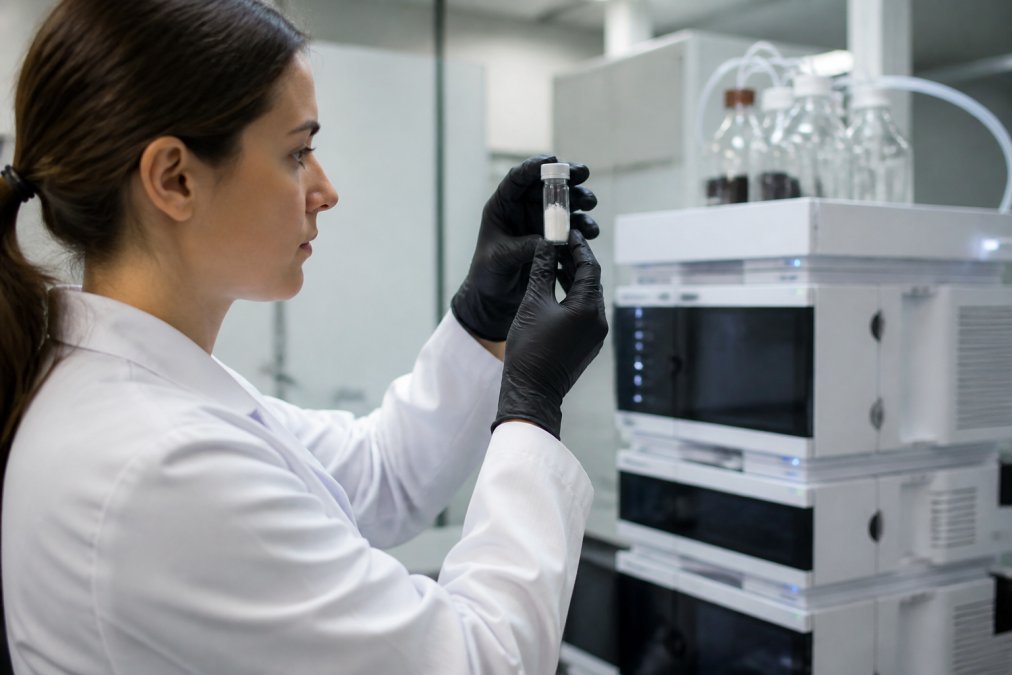
In-house quality control has an obvious limitation: the same organization that profits from selling you the peptide is also the one certifying its quality. Independent verification removes that conflict. A reputable third-party lab uses mass spectrometry and HPLC to confirm molecular weight, peptide purity, and sequence identity, with results documented in a Certificate of Analysis tied to a specific lot number.
Mass Spectrometry and HPLC Testing Explained
Mass spectrometry measures the molecular weight of a compound by ionizing it and separating ions by their mass-to-charge ratio. For peptides, this confirms that the synthesized sequence matches the intended molecular weight, catching truncation errors or missed couplings that would compromise your experimental results.
High-performance liquid chromatography (HPLC) measures peptide purity by separating components in a sample and quantifying each peak area. A peptide purity result, typically 95%, 98%, or higher for research-grade compounds, comes from HPLC analysis. The higher the purity, the less you're dealing with synthesis byproducts that could confound your assay data.
Together, these two methods form the analytical backbone of any credible quality control protocol. According to NIH resources on peptide characterization methods, mass spectrometry and HPLC are the accepted standard methods for confirming the identity and purity of synthetic peptides in research applications.
A critical point: HPLC purity and mass spec confirmation are not interchangeable. A peptide can pass mass spec while still containing significant impurities that HPLC would catch. Demand both results on the COA.
How to Read a Certificate of Analysis for Research Peptides
A Certificate of Analysis is a document issued by a testing laboratory that records the analytical results for a specific batch of a compound. For research peptides, a legitimate COA should contain the following elements:
| COA Field | What It Tells You | What to Watch For |
|---|---|---|
| Lot number | Links the document to a specific batch | Must match the vial label exactly |
| Peptide sequence | Confirms the amino acid sequence | Any discrepancy is disqualifying |
| Molecular weight | Verified by mass spectrometry | Should match the theoretical MW |
| Purity percentage | Measured by HPLC | Below 95% is substandard for research use |
| Testing lab name | Identifies the third-party verifier | Should be an independent, named laboratory |
| Test date | Confirms data freshness | Avoid COAs older than 12 months for active stock |
A COA without a named testing laboratory is an internal document, not independent verification.
Verifying COA Authenticity Before You Order
Getting a COA is one thing; confirming it's real is another. Fraudulent or recycled COAs are a known problem in the research chemical market.
Practical verification steps:
- Match the lot number on the COA to the lot number on your product label when it arrives. If they don't match, the COA is not for your product.
- Contact the testing lab directly. Most legitimate analytical laboratories will confirm whether a specific lot number appears in their records.
- Check the test date against the synthesis date. A COA dated before the lot number's synthesis date indicates document manipulation.
- Look for instrument-specific data. Authentic HPLC reports include chromatogram traces. A COA listing only a purity number without supporting chromatographic data has likely been summarized rather than directly generated.
Scientific integrity depends on this step. Researchers who skip COA verification build experiments on unverified foundations, wasting far more time and funding than careful vetting costs upfront.
Research Peptide Storage Guidelines That Protect Your Investment
Proper storage is a direct determinant of whether your peptides remain biologically active and analytically consistent throughout your project. Peptides degrade through hydrolysis, oxidation, and aggregation when exposed to moisture, heat, light, or repeated freeze-thaw cycles.
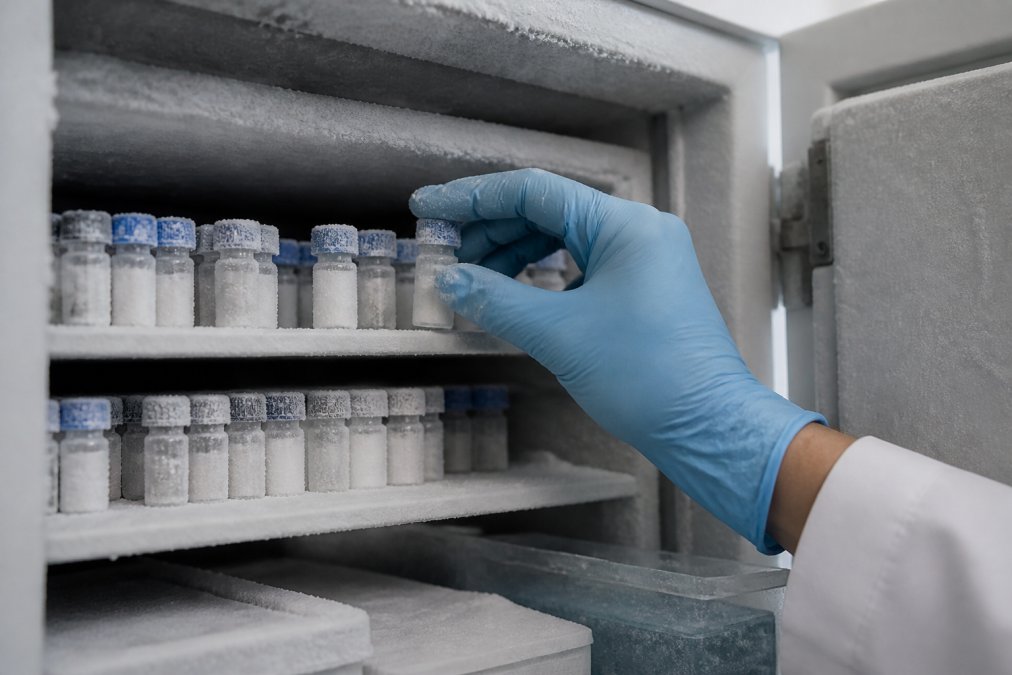
Most research-grade peptides arrive in lyophilized form, freeze-dried powder, which provides significantly better storage stability than reconstituted solution. Here are the standard protocols:
| Storage State | Temperature | Key Precautions |
|---|---|---|
| Lyophilized (powder) | -20°C or below | Desiccant, dark, sealed container |
| Reconstituted solution | 4°C (short-term) | Aliquot to avoid freeze-thaw cycles |
| Reconstituted solution | -80°C (long-term) | Single-use aliquots strongly recommended |
| Working aliquots | 4°C | Use within 48-72 hours |
A common mistake is reconstituting an entire vial at once. Repeated freeze-thaw cycles degrade peptide purity measurably, particularly for peptides containing methionine, cysteine, or tryptophan residues, which are especially susceptible to oxidation. Aliquot before freezing.
Storage stability also depends on the peptide sequence itself. If your supplier provides sequence-specific storage recommendations on the COA or product documentation, follow those over generic guidance.
What to Look for When Buying Research Grade Peptides Online
The difference between a supplier worth trusting and one that isn't usually comes down to documentation transparency, inventory reliability, and post-sale support. Price is rarely the right primary filter; a cheaper vial that produces inconsistent assay results costs more in failed experiments than a well-documented compound at a higher price point.
Frontline Peptides addresses this directly: every product is third-party tested, documentation is available before purchase, and the team is reachable for technical questions.
Supplier Evaluation Checklist
Use this checklist before placing any order for research grade peptides online:
- Third-party COA available for the specific lot, not a generic batch
- COA includes both mass spectrometry and HPLC purity data
- Named independent testing laboratory identified on the COA
- Lot number visible on product listing
- Clear "laboratory and scientific use only" labeling
- Lyophilized product with defined storage recommendations
- U.S.-based supplier with verifiable physical presence
- Responsive customer support with technical capability
- Transparent pricing with no hidden fees at checkout
- Consistent inventory, not perpetually "back-ordered"
Ordering, Shipping, and Inventory Reliability
Inventory reliability is a legitimate concern for researchers who've experienced mid-project supply disruptions. U.S.-based suppliers with domestic manufacturing or warehousing relationships can typically ship faster and maintain more consistent stock than those relying entirely on overseas production. According to U.S. Pharmacopeia standards for pharmaceutical-grade compounds, batch consistency and supply chain traceability are foundational requirements for research-grade compound sourcing.
For urgent requests, confirm shipping timelines before ordering rather than assuming. A supplier with fast shipping as a stated commitment should provide specific fulfillment windows. Frontline Peptides offers fast shipping as a core operational commitment, which matters when your project timeline doesn't have room for delays.
Custom Peptide Synthesis and GLP-Grade Documentation
Custom peptide synthesis is the process of manufacturing a peptide to a researcher-specified amino acid sequence, often for applications where catalog compounds don't exist or where a proprietary sequence is required for drug development or mechanistic research.
For pharma-adjacent work, documentation requirements go beyond a standard COA. GLP-grade compounds, those used in Good Laboratory Practice-compliant studies, require batch records, chain-of-custody documentation, and method validation reports that demonstrate the analytical testing process itself meets defined standards. As documented in FDA Good Laboratory Practice regulations for nonclinical laboratory studies, GLP compliance involves not just the compound's purity but the entire documentation trail surrounding its production and testing.
What to request for GLP-grade custom synthesis:
- Full batch record with synthesis dates and operator sign-off
- Method validation data for the HPLC and mass spectrometry assays used
- Certificate of Analysis with instrument-specific data
- Stability data if the compound will be stored before use
- Chain-of-custody documentation from synthesis to delivery
Custom synthesis timelines vary by sequence complexity and order volume. Confirm lead times explicitly, especially for projects with regulatory submission deadlines.
| Evaluation Criterion | What to Verify | Why It Matters |
|---|---|---|
| Third-party testing | Named lab, lot-specific COA | Ensures independent purity confirmation |
| Purity level | HPLC result 95%+ | Below threshold compromises assay reliability |
| Synthesis documentation | Batch records, method data | Required for GLP and reproducible research |
| Storage format | Lyophilized preferred | Better stability during transit and storage |
| Inventory reliability | U.S.-based stock, stated lead times | Prevents mid-project supply disruptions |
| Customer support | Technical staff reachable | Critical when questions arise post-delivery |
Sourcing research grade peptides online without a disciplined vetting process compromises months of experimental work. The Frontline Peptides team built our procurement model around the specific concerns researchers raise before they order: documentation transparency, inventory reliability, technical support, and fast domestic shipping. Visit Frontline Peptides to review current product documentation, check lot-specific COAs, and continue shopping with confidence that your compounds meet the standard your research requires.
Frequently Asked Questions
Q: How do I verify the purity of research grade peptides before buying?
A: Ask the supplier for a Certificate of Analysis (COA) generated by an independent, accredited laboratory, not an in-house report. The COA should confirm peptide purity via HPLC and verify molecular weight through mass spectrometry. Cross-check the lot number on the COA against the vial label when your order arrives. Suppliers of legitimate research grade peptides will provide this documentation freely, often before purchase, and will update it for each new batch.
Q: What documentation should accompany research-grade peptides?
A: Every shipment of research grade peptides should include a Certificate of Analysis showing purity percentage, HPLC chromatogram data, mass spectrometry confirmation of molecular weight, lot number, and synthesis date. For GLP-grade compounds used in pharmaceutical client work, you should also expect batch consistency records and standardized protocols documenting quality control procedures. A supplier that cannot provide complete documentation is a significant risk to your research integrity and reproducibility.
Q: Can I just buy peptides online for research purposes?
A: Yes, synthetic peptides sold as research chemicals can be purchased online for legitimate laboratory and scientific research use. They are not approved for human consumption, clinical use, or veterinary administration. Qualified researchers should confirm the supplier is U.S.-based, provides third-party tested products with valid COAs, and ships with proper labeling that states 'for laboratory use only.' Buying from an unverified source risks receiving material with unknown purity, incorrect peptide sequence, or undisclosed contaminants.
Q: How should research peptides be stored to maintain stability?
A: Most lyophilized peptides should be stored at -20°C in a sealed, moisture-free environment. Once reconstituted, store the solution at 4°C and use within the timeframe specified on the COA or supplier documentation. Avoid repeated freeze-thaw cycles, as these degrade biologically active sequences. Peptides containing cysteine, methionine, or tryptophan are especially sensitive to oxidation and should be stored under inert gas when possible. Always follow the storage stability data provided with each specific lot.
Q: What is the best way to evaluate a research peptide supplier?
A: Prioritize suppliers that publish third-party COAs for every batch, use HPLC and mass spectrometry for quality control, and clearly state that products are for laboratory use only. Check whether the supplier is U.S.-based with verifiable contact information and responsive customer support. Consistent inventory, fast shipping, and transparent pricing are practical indicators of a professional operation. Avoid providers that cannot produce lot-specific documentation, offer unusually low prices without explanation, or make any health or therapeutic claims about their compounds.
This article was written using GrandRanker