

Table of Contents
- What Makes Peptides Affordable for Academic Labs?
- Price Comparison: 10 Research Peptides Under $50
- Buying Research Grade Peptides Online: A Procurement Checklist
- Why Third-Party Tested Peptides for Research Matter
- Bulk Peptide Pricing for Laboratories: How to Save
- Storage and Stability: Protecting Your Investment
- Conclusion
- Frequently Asked Questions
Last Updated: September 14, 2026
What Makes Peptides Affordable for Academic Labs?
Affordable peptides for academic labs come down to three cost drivers: synthesis scale, third-party testing, and packaging, and the same three factors explain why affordable peptides vary so much between vendors.
A research peptide is a synthetically produced amino acid chain for controlled laboratory study, not human use. What you pay for is verifiable purity, documented testing, and stable handling.
Researchers on tight grant cycles ask the same question every quarter: why do two vendors quote wildly different prices for the same 10 mg vial?
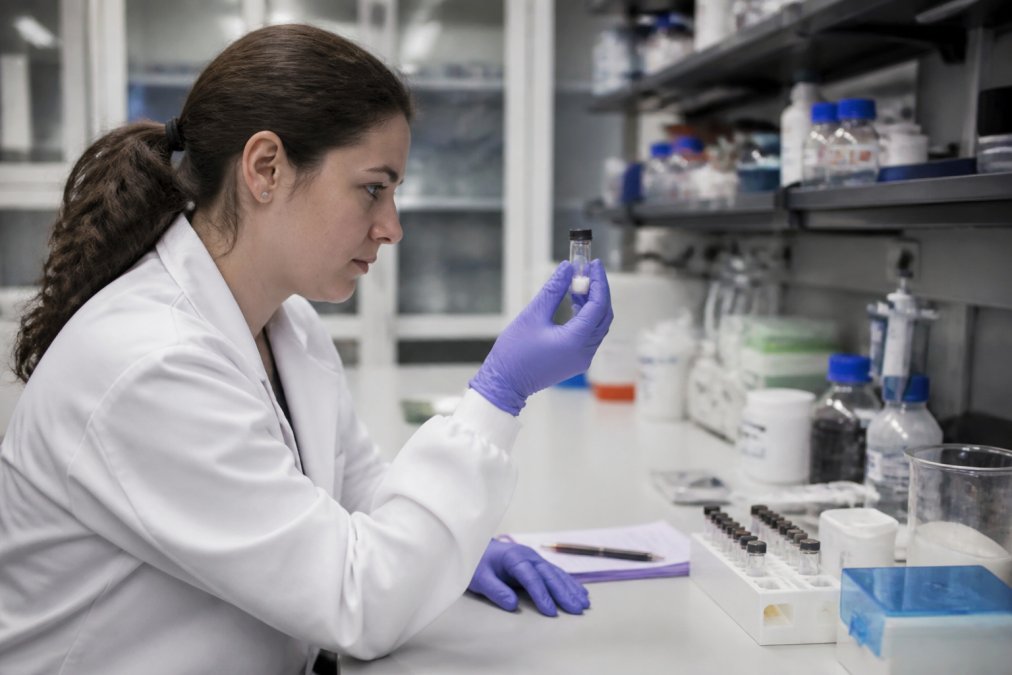
Cost Drivers: Synthesis, Testing, and Packaging
Synthesis is the smallest variable: solid-phase synthesis scales efficiently, so a short sequence costs little. Prices diverge on testing and documentation.
A vendor running HPLC and mass spectrometry on every batch and publishing a certificate of analysis carries real overhead. One that does not carries none.
Packaging adds the last layer: lyophilized powder in sealed vials with desiccant holds stability far better than pre-mixed solutions, but costs more to produce and ship.
Price Comparison: 10 Research Peptides Under $50
Ten research peptides in the Frontline Peptides catalog list at or under $50 per vial, covering applications from tissue-repair models to metabolic signaling studies.
| Peptide | Vial Size | Price | Common Research Focus |
|---|---|---|---|
| KPV | 10 mg | $24.00 | Peptide-signaling pathways |
| Selank | 10 mg | $25.00 | Neuroregulatory signaling |
| BPC-157 | 10 mg | $30.00 | Cellular signaling, structural function |
| GHK-Cu | 100 mg | $30.00 | Copper-dependent biological activity |
| Glutathione | Varies | $30.00 | Oxidative stress, redox balance |
| MT-2 | 10 mg | $30.00 | Melanocortin receptor research |
| MOTS-C | 10 mg | $35.00 | Mitochondrial signaling |
| Epitalon | 10 mg | $35.00 | Cellular signaling, circadian pathways |
| TB-500 | 10 mg | $48.00 | Tissue repair, cell migration |
| AOD-9604 | Varies | $50.00 | Fat metabolism, lipolysis |
BPC-157, TB-500, KPV, and More
BPC-157 sits at the center of most academic peptide work: a synthetically produced fragment studied for structural stability and consistent behavior across repeated experiments, making it a workhorse for cellular signaling studies. A 10 mg vial runs $30.00.

TB-500 is the priciest entry at $48.00, earning it through research breadth: investigated in cell culture and animal models for tissue repair, cell migration, angiogenesis, and inflammation modulation. Human clinical data remains limited, which is why academic labs keep studying it.
KPV is the budget entry at $24.00 and among the most cost-effective options for peptide-signaling pathway analysis; Selank at $25.00 covers neuroregulatory communication research. Both are short sequences, which synthesize cheaply.
Buying Research Grade Peptides Online: A Procurement Checklist
Buying research grade peptides online safely means verifying five things before any purchase order goes out: documentation, testing methodology, storage guidance, shipping terms, and vendor responsiveness. For academic labs, the harder problem is getting that vendor through the institution's purchasing system without stalling the science.
Run this checklist on every new supplier; it takes twenty minutes and saves weeks of rework.
- Certificate of analysis available per batch, not per product line
- Purity verification method named (HPLC and mass spectrometry, not "lab tested")
- Molecular weight and amino acid sequence documented
- Storage conditions stated for both lyophilized and reconstituted forms
- Shipping method and cold-chain handling described
- Research-use-only labeling and terms confirmed
- A real person answers a technical question within one business day
The last item is not a soft criterion. Institutional procurement workflows often require a documented vendor qualification step, and a supplier who cannot answer a technical question in writing will fail that step. NIH grants policy on allowable costs outlines how documentation requirements apply to federally funded research purchases, and the paper trail starts with your supplier.
Third-party tested peptides for research carry an extra advantage: the testing lab's name appears on the report, so your institution can verify the result independently rather than trusting the vendor's word.
The Institutional Procurement Workflow Most Guides Skip
Most vendor guides are written for an individual researcher with a credit card. Academic purchases instead move through the principal investigator, a lab manager, a department business office, and central procurement or accounts payable. Each step has its own requirements, and a vendor who has never sold to a university will slow all of them down.
A common pattern looks like this:
- Requisition and approval. The PI or lab manager submits a requisition, which may need one or more approvals before becoming a purchase order.
- Purchase order issuance. Procurement issues a PO number. Most universities will not pay an invoice that does not reference a valid PO, so the vendor must be willing to quote against a PO rather than demand prepayment.
- Vendor onboarding. New suppliers often must complete a W-9, register in the supplier portal, and agree to the university's standard terms; some institutions also require a certificate of insurance.
- Receiving and invoice matching. Receiving confirms the shipment, and accounts payable matches the invoice to the PO and receiving record before releasing payment.
- Payment terms. Universities typically pay on net 30 or net 45 terms. A vendor who only accepts prepayment by card can be a poor fit for this system.
Tax Exemption and Documentation
Most universities and many research institutions hold a state sales tax exemption for research purchases, but it rarely applies automatically: the vendor needs your institution's exemption certificate on file, matching the entity placing the order.
Two practical points follow from this:
- Confirm whether your institution's exemption covers research reagents and whether it is a blanket certificate or must be issued per order.
- Make sure the vendor can apply the exemption at invoicing, not just at checkout. A supplier that only supports consumer-style checkout may charge tax you then have to recover through a refund process.
Questions to Ask Before the First PO
- Can you quote against a purchase order and invoice on net terms?
- Will you complete a W-9 and register in our supplier portal?
- Can you apply our sales tax exemption certificate at invoicing?
- Who is the technical contact if our lab has a question about a specific lot?
- Can you provide the certificate of analysis for the exact lot before shipment?
A supplier who can answer all five in writing is set up for academic purchasing; one who cannot will create friction for a department.
Why Third-Party Tested Peptides for Research Matter
Third-party testing is the strongest predictor of experimental reproducibility. A peptide arriving at 92% purity when the label claims 99% skews your assay results, and you will not know until a replication attempt fails months later (pubmed.ncbi.nlm.nih.gov).
Analytical transparency means the vendor publishes the actual test data, not a summary claim. Each batch should include:
- High-performance liquid chromatography traces showing the purity threshold
- Mass spectrometry results confirming molecular weight
- The testing laboratory's identity and the date of analysis
Purity standards in research peptide supply generally target 99% or higher for sensitive assays. Anything below that introduces unknown peptide derivatives and truncation products into your experiment.
This is the part most guides skip: comparative purity methodology. Two vendors can both claim "99% pure" while measuring differently, one by area under the HPLC curve at a single wavelength, another by gradient method with mass confirmation. The second is more trustworthy to cite. Ask which method was used, and ask for the trace.
Bulk Peptide Pricing for Laboratories: How to Save
Bulk peptide pricing for laboratories drops fastest when you consolidate orders across a research group rather than negotiating single-vial discounts. Most suppliers price by vial, so savings come from volume and predictability.
Three approaches work in practice:
- Pool orders across labs. A shared purchase covering four research groups often crosses the threshold where per-vial pricing improves.
- Standardize on a short list. Committing to a core set of compounds for a semester gives the supplier forecast visibility, which is worth more than a one-off large order.
- Order lyophilized, not reconstituted. Dry powder has a longer shelf life, so you can buy a larger quantity without losing material to degradation.
For a lab on a shoestring budget, build a standing order around the highest-use compounds and treat everything else as needed. A group running tissue-repair models burns through BPC-157 and TB-500 fastest, so those belong on the standing list.

Frontline Peptides prices these compounds per vial with no minimum order, so a small academic lab can start with a single 10 mg vial and scale up once the protocol is validated, removing pressure to over-commit grant funds.
How Storage Stability Sets Your Real Bulk Quantity
The bulk quantity you can safely buy is limited by how long the compound stays usable, not by budget, making storage the deciding variable.
Lyophilized powder is the stable form: kept cool, dry, and protected from light, it holds integrity far longer than a reconstituted solution, which is why bulk purchases should almost always be dry powder. Once in solution, stability drops and the clock starts.
A common pattern for planning a bulk order:
- Estimate monthly consumption per compound from your protocol.
- Match that to the shelf life of the lyophilized form under your storage conditions.
- Buy only as much as you can use within that window, then reorder.
A larger vial is not automatically a better deal: if a compound degrades before you finish it, the unused portion is a loss and the effective cost per usable milligram goes up, not down.
Comparative Purity Methodology: Why Two "99%" Labels Differ
Two vendors can both claim 99% purity while measuring it differently, and the difference matters for a bulk purchase because you are committing to more material at once.
- HPLC by area under the curve. The most common method. It reports the percentage of the peak area attributable to the target compound at a given wavelength. It is useful but sensitive to the method: a shallow gradient and a single wavelength can hide closely eluting impurities.
- HPLC with mass spectrometry confirmation. The mass spec confirms the molecular weight of the main peak, which verifies that the dominant peak is actually your peptide and not a co-eluting contaminant. This is the stronger combination.
- Method details that change the number. Gradient shape, column, wavelength, and integration settings all affect the reported purity. A trace run under one set of conditions is not directly comparable to a trace run under another.
For a bulk order, ask which method was used and request the actual trace, not just the percentage. A supplier who publishes the trace and names the testing laboratory gives you something citable and verifiable; one who reports only a number gives you a claim.
Storage and Stability: Protecting Your Investment
Storage conditions decide whether your peptide is still usable in six months. Lyophilized powder stored cool, dry, and protected from light holds stability far longer than any reconstituted solution.
The standard protocol most labs follow:
- Keep dry compound in a cool, dry, light-protected environment
- Refrigerate after reconstitution
- Freeze at approximately -20°C for extended storage (pubmed.ncbi.nlm.nih.gov)
- Avoid repeated freeze-thaw cycles, which degrade the peptide chain
Reconstitution is where many protocols go wrong: use laboratory-grade solvent, add it slowly down the vial wall rather than onto the powder, and let it dissolve without vortexing or vigorous shaking, since mechanical agitation can shear the peptide structure.
Write the reconstitution date on every vial: a peptide in solution for weeks behaves differently than a fresh one, and undocumented age is a variable you cannot control for.
Conclusion
The real constraint on academic peptide budgets is not the sticker price but the cost of a failed experiment caused by an undocumented batch, an unverified purity claim, or a vial that degraded because nobody wrote the reconstitution date on it.
Frontline Peptides supplies research-grade compounds with third-party testing on every batch, certificates of analysis available before purchase, and lyophilized packaging built for long-term storage. We ship domestically, answer technical questions with a real person, and price per vial so a small lab is not forced into a bulk commitment it cannot justify to a grant committee. Start your next protocol with documentation you can cite, and continue shopping at Frontline Peptides.
Frequently Asked Questions
What criteria should academic labs use to verify peptide purity?
Academic labs should request a certificate of analysis (CoA) for every batch. The CoA should show purity results from high-performance liquid chromatography (HPLC) and confirm molecular weight via mass spectrometry. Look for a purity threshold of 99% or higher for research-grade compounds. Reputable suppliers like Frontline Peptides provide batch-specific CoAs so you can verify analytical transparency before purchase.
Are affordable peptides reliable for peer-reviewed studies?
Yes, if they meet quality standards. Affordable peptides can be reliable when the supplier provides third-party tested peptides for research with documented purity and identity. The key is vendor qualification: check for HPLC and mass spectrometry data, consistent batch testing, and U.S.-based manufacturing. Low price alone does not mean low quality, but you should always verify documentation before using compounds in peer-reviewed work.
How does third-party testing impact the cost of research peptides?
Third-party testing adds to the supplier's cost, which can raise the price per vial by a few dollars. However, it provides independent purity verification and a CoA you can cite in publications. For academic labs, this documentation is often required for institutional research compliance. Frontline Peptides includes third-party testing in its pricing, with compounds like BPC-157 starting at $30.
What are the benefits of buying peptides in bulk for university labs?
Bulk peptide pricing for laboratories lowers the per-unit cost and reduces the number of separate orders, which saves on shipping and administrative time. It also helps maintain supply chain consistency because you receive compounds from the same batch, reducing variability between experiments. For labs running repeated assays, bulk purchasing supports experimental reproducibility and budget predictability.
What documentation should accompany research-grade peptides?
Every shipment should include a batch-specific certificate of analysis (CoA) showing purity by HPLC, molecular weight by mass spectrometry, and the date of testing. Look for storage conditions, reconstitution instructions, and a research-use-only disclaimer. This documentation supports institutional procurement workflows and helps you maintain standard operating procedures for quality control in your lab.