

Table of Contents
- Understanding Reconstitution and the 28-Day Rule
- Storage Temperature Guidelines for Reconstituted Peptides
- Bacteriostatic Water for Peptide Reconstitution
- Signs of Peptide Degradation You Should Know
- Storing Lyophilized Peptides in the Freezer
- Freeze-Thaw Cycles and Stability Loss
- Travel Storage Protocols and Cold Chain Management
- Frequently Asked Questions
Last Updated: October 1, 2026
Understanding Reconstitution and the 28-Day Rule
Understanding reconstituted research peptides shelf life is essential: typically 28 days when stored correctly in a refrigerator, assuming proper storage protocols from day one.
Reconstitution is mixing lyophilized peptide powder with a solvent, usually bacteriostatic water. The clock starts immediately.

This reconstituted research peptides shelf life of 28 days accounts for bacterial growth, oxidation, and molecular degradation that occur even under ideal refrigeration. After 28 days, contamination and potency loss risk increases significantly.
Storage Temperature Guidelines for Reconstituted Peptides
Reconstituted research peptides require refrigeration between 2°C and 8°C (36°F to 46°F) to slow bacterial growth and minimize oxidation.
Temperature stability matters more than the exact degree. Avoid the refrigerator door where swings are largest; store vials at the back, away from air currents.
Never store reconstituted peptides at room temperature; ambient conditions accelerate degradation dramatically. Transport vials in insulated containers with ice packs.
Freezing reconstituted peptides introduces risk from ice crystal damage. If necessary, freeze only once and thaw when ready to use.
Bacteriostatic Water for Peptide Reconstitution
Bacteriostatic water is sterile water containing 0.9% benzyl alcohol, a preservative that inhibits microbial growth and extends shelf life. Buffer chemistry of your reconstitution medium directly affects peptide stability.
How benzyl alcohol extends shelf life:
Benzyl alcohol disrupts microbial cell membranes at 0.9%, making reconstituted peptides in bacteriostatic water last the full 28 days more reliably than in plain sterile water. Refrigeration remains essential for chemical stability.
Plain sterile water offers no microbial protection; peptides reconstituted in it last 14 days or less. Use bacteriostatic water for extended storage.
The pH and buffer chemistry that most guides miss:
Bacteriostatic water is not buffered; its pH typically ranges from 5.5 to 7.0. Shelf life depends on whether pH matches the peptide's stability window.
Peptides with histidine residues are pH-sensitive. Below pH 6.0, histidine protonation triggers aggregation. Above pH 7.5, deamidation accelerates, causing potency loss even if the peptide looks clear.
Many laboratories use phosphate-buffered saline (PBS) or acetate buffers to maintain pH stability and prevent deamidation. Follow your supplier's buffer recommendations; they're based on that peptide's stability profile.
Osmolarity and peptide stability:
Bacteriostatic water is hypotonic; peptides with charged sequences can aggregate in hypotonic solutions. Isotonic bacteriostatic water (with 0.9% sodium chloride) prevents osmotic stress and extends shelf life for aggregation-prone peptides.
Practical reconstitution guidance:
Follow your supplier's reconstitution instructions exactly. Without instructions, use bacteriostatic water as default, but expect shorter shelf life (14-21 days) for pH-sensitive peptides.
For maximum shelf life, ask your supplier whether a buffered reconstitution medium is recommended. The small cost difference is worth the extended stability window and reduced risk of mid-experiment degradation.
Aseptic technique during reconstitution:
Use proper aseptic technique when drawing bacteriostatic water from the bottle. Contaminated water ruins your entire batch. Use a sterile needle and syringe, swab the rubber septum of the bacteriostatic water bottle with 70% isopropyl alcohol before puncturing, and allow the alcohol to dry completely before inserting the needle. This prevents introducing bacteria or fungi that would overwhelm the benzyl alcohol's preservative effect.
Signs of Peptide Degradation You Should Know
Degraded peptides show visible and chemical warning signs. Learning to spot them prevents wasted research and false results. More importantly, understanding the chemistry behind degradation helps you predict when it will occur and why certain storage conditions matter more than others.
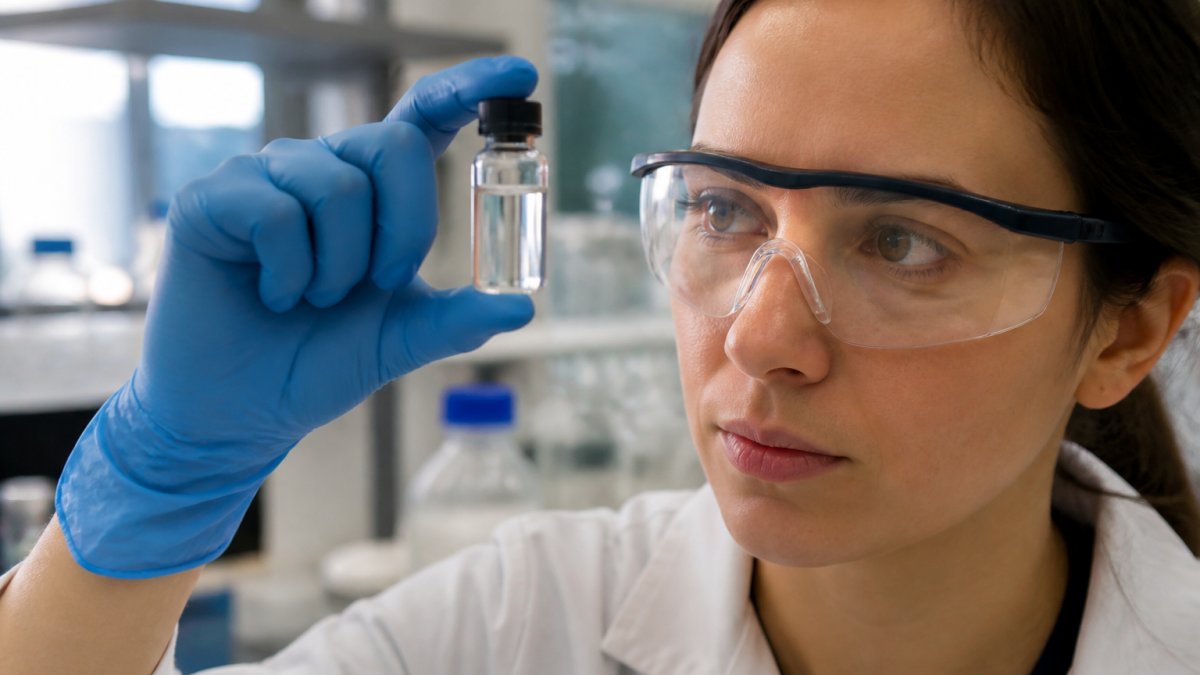
Visual indicators of degradation:
Cloudiness or particles indicate bacterial contamination or precipitation. A clear solution should stay clear. If your vial develops a haze or visible particles, the peptide is compromised. Discard it. Cloudiness typically appears as a fine white or gray suspension that doesn't settle, distinguishing it from normal sediment.
Discoloration ranges from slight yellowing to brown tints. This signals oxidation, where oxygen has damaged the peptide's molecular structure. The longer a vial sits, the higher the oxidation risk, especially if exposed to light. Yellowing often appears first at the liquid surface, where oxygen concentration is highest.
Unusual odor is less common but serious. A sour or off smell suggests bacterial growth or chemical breakdown. Trust your nose; if something smells wrong, it probably is.
Separation or layering means the peptide solution is breaking down. Components should remain evenly mixed. Visible separation indicates degradation has progressed significantly.
The chemistry behind what you're seeing:
Three primary chemical degradation pathways occur in reconstituted peptides, each producing distinct visual or functional changes:
-
Deamidation, The most common pathway in stored peptides. Asparagine and glutamine residues lose their amide groups, converting to aspartate and glutamate. This process is accelerated by elevated pH (above 7.5) and higher temperatures. Deamidation doesn't always produce visible changes, which is why it's dangerous: your peptide may look fine while losing potency. It typically causes a 10-20% potency loss over 28 days at 2-8°C, but can accelerate dramatically if pH drifts upward due to buffer degradation.
-
Oxidation, Methionine and cysteine residues are particularly vulnerable. Oxidation produces discoloration (yellowing or browning) and is accelerated by light exposure and temperature fluctuations. Peptides stored in clear vials near laboratory lighting degrade faster than those in amber vials in dark storage. Oxidation typically causes 5-10% potency loss per month under standard refrigeration, but can exceed 30% loss if the vial is exposed to direct sunlight or stored near heat sources.
-
Hydrolysis, Water molecules break peptide bonds, fragmenting the molecule. This is rare in properly reconstituted peptides but accelerates if pH drops below 3 or rises above 9. Hydrolysis produces visible cloudiness as fragments precipitate out of solution. It's largely preventable with proper buffer selection.
Reduced potency without visible signs is the hardest degradation to detect. If your experimental results suddenly decline mid-batch while using the same peptide vial, deamidation or oxidation has likely occurred even if the solution appears clear. This is why dating your vials and tracking storage conditions matters: you can correlate potency loss with storage duration and conditions.
How to inspect systematically:
Check your vials weekly using this protocol: (1) Hold the vial against a white background under bright laboratory lighting and look for particles, haze, or discoloration. (2) Tilt the vial slowly to observe whether the solution flows smoothly or shows separation. (3) Smell the vial briefly after opening the cap, a sour or chemical odor indicates microbial or chemical degradation. (4) If you notice any change from the day you reconstituted, record it and plan to use the peptide within 7-14 days rather than the full 28-day window.
Storing Lyophilized Peptides in the Freezer
Lyophilized peptides are freeze-dried powder in their original vial. They're far more stable than reconstituted peptides and can last years in the freezer when stored correctly. The key is protecting them from moisture and temperature swings.
Store lyophilized peptides at -20°C (-4°F) or colder in a standard freezer. Many researchers use -80°C freezers for maximum stability, though -20°C is acceptable for most applications. The colder the storage, the longer the shelf life.
Keep lyophilized vials in a sealed container or desiccant box. Freezers are humid environments.
Freeze-Thaw Cycles and Stability Loss
Each time you freeze and thaw a reconstituted peptide, you risk damaging it. Ice crystals form during freezing and can puncture peptide molecules during thawing. The damage accumulates with each cycle.
Travel Storage Protocols and Cold Chain Management
Transporting reconstituted peptides requires maintaining the cold chain. Temperature breaks during shipping destroy potency and invite contamination.
| Storage Condition | Temperature Range | Shelf Life | Best Practice |
|---|---|---|---|
| Refrigerated (reconstituted) | 2-8°C (36-46°F) | 28 days | Standard for active research |
| Frozen (reconstituted) | -20°C (-4°F) or colder | 3-6 months | Use only if necessary; accept potency loss |
| Lyophilized (powder) | -20°C or -80°C | 2-5 years | Ideal for long-term storage |
| Room temperature (reconstituted) | 20-25°C (68-77°F) | 24-48 hours | Emergency only; high degradation risk |
Frequently Asked Questions
How long do reconstituted research peptides stay stable?
Most reconstituted research peptides remain stable for up to 28 days when stored at 2-8°C (refrigerated). This timeframe assumes proper storage conditions, sterile handling, and use of bacteriostatic water as the reconstitution solvent. After 28 days, degradation accelerates significantly due to oxidation, deamidation, and microbial growth. Storage at room temperature dramatically shortens this window to just 1-3 days. Freezing at -20°C or below can extend stability to several months, though freeze-thaw cycles introduce risk of molecular damage.
What are the main signs that reconstituted peptides have degraded?
Visual indicators include cloudiness, discoloration (yellowing or browning), visible precipitate, or particulates in the solution. Degraded peptides may also develop an off odor. Chemically, degradation occurs through oxidation, deamidation (loss of amino acid side chains), and hydrolysis, which reduce potency even if the solution appears clear. If your peptide solution shows any of these signs, it should not be used in research protocols. Temperature fluctuations, exposure to light, and contamination accelerate these visible changes.
Should I use bacteriostatic water or sterile water for reconstitution?
Bacteriostatic water is the preferred choice for multi-dose vials because it contains 0.9% benzyl alcohol, which inhibits microbial growth and extends shelf life significantly. Bacteriostatic water allows safe storage of reconstituted peptides for the full 28-day window under refrigeration. Sterile water lacks this preservative and is better suited for single-dose applications or immediate use. Frontline Peptides offers bacteriostatic water in both 3mL and 30mL formats, providing reliable preparation solutions for your research workflows.
Can I freeze reconstituted peptides to extend their shelf life?
Yes, freezing at -20°C or colder can extend shelf life to several months. However, repeated freeze-thaw cycles damage the peptide's molecular structure through ice crystal formation, causing deamidation and loss of potency. If you freeze reconstituted peptides, minimize thawing cycles by aliquoting into smaller portions before freezing. Store in airtight vials to prevent oxidation. Lyophilized (freeze-dried) peptides maintain stability for years when frozen, making them preferable for long-term storage compared to reconstituted solutions.