

Table of Contents
- What Determines Fast Shipping for Laboratory Compounds?
- Understanding Lead Times for Research Grade Chemicals
- Shipping Regulations for Laboratory Reagents and Hazardous Goods
- Cold-Chain and Temperature-Sensitive Logistics
- How to Choose a Reliable Peptide Supplier for Fast Delivery
- Common Shipping Mistakes That Delay Your Research
- Fast Shipping for Laboratory Compounds: Final Checklist
- Frequently Asked Questions
Last Updated: September 7, 2026
When your research depends on time-sensitive compounds, the difference between a successful experiment and a wasted week often comes down to logistics. Fast shipping for laboratory compounds isn't just about speed; it involves careful coordination between inventory accuracy, regulatory compliance, and packaging integrity. At Frontline Peptides, we've learned that true delivery speed requires a system built for scientific precision, not just a courier label. Below, we'll show you what determines real transit times and how to ensure your next order arrives intact and on schedule.
What Determines Fast Shipping for Laboratory Compounds?
The actual speed of your delivery depends on three interconnected factors: inventory availability, order processing time, and the shipping method you select. A supplier can promise overnight delivery, but if the compound isn't in stock or the order sits in a queue for 48 hours, that promise means nothing.
Order fulfillment begins the moment you place your order. Suppliers who integrate real-time inventory management can confirm stock availability instantly, preventing the frustrating scenario where you discover a backorder after checkout. Look for vendors that process orders the same business day when placed before a stated cut-off time.
Standard transit times vary significantly by carrier and distance. Domestic shipping within the contiguous United States typically takes 2-5 business days for ground services, while expedited delivery options can reduce this to 1-2 days (usps.com). For urgent research needs, many suppliers offer same-day processing combined with overnight carriers, though this naturally increases shipping costs.
Understanding Lead Times for Research Grade Chemicals
Lead times for research grade chemicals differ from consumer goods because of the handling requirements involved. Most reputable suppliers maintain a ready-to-ship inventory of common compounds, allowing for rapid dispatch. However, custom synthesis orders or less common reagents may require additional production time.

A realistic expectation for stocked items is 24-48 hours from order confirmation to carrier pickup. This window includes order verification, quality checks, and proper packaging. When you're evaluating a supplier, ask directly about their current lead times for the specific compounds you need, as availability can fluctuate based on demand.
Bulk quantities and specialized formulations typically require longer lead times. If your research project depends on a tight schedule, communicate your timeline upfront. Many experienced suppliers can advise on which compounds are readily available versus those that might need additional preparation time.
Shipping Regulations for Laboratory Reagents and Hazardous Goods
Laboratory reagents often fall under hazardous materials regulations, which directly impacts how fast they can ship. The U.S. Department of Transportation (DOT) enforces strict packaging and labeling requirements for hazardous goods under Title 49 of the Code of Federal Regulations (49 CFR) (ecfr.gov). Carriers like FedEx and UPS also impose their own restrictions on the volume of these materials they accept on any given flight or route.
GHS-compliant labeling is mandatory for many chemical compounds. This includes proper hazard pictograms, signal words, and safety data sheets (SDS) accessible to handlers. A supplier that shortcuts these packaging protocols risks shipment delays at carrier checkpoints or, worse, regulatory penalties.
Shipping restrictions also apply to certain compounds that are temperature-sensitive or require special containment. These items may be restricted to ground transport only, eliminating overnight air options. Understanding these constraints before ordering helps you plan realistic delivery windows for your research.
Key Regulatory Bodies and Their Roles
- U.S. Department of Transportation (DOT): Enforces ground transport rules for hazardous materials under 49 CFR Parts 171-180. This includes packaging performance standards and labeling requirements.
- U.S. Environmental Protection Agency (EPA): Regulates certain chemical substances under the Toxic Substances Control Act (TSCA), which can affect whether a compound can be shipped domestically without special permits.
- Occupational Safety and Health Administration (OSHA): Mandates the Hazard Communication Standard (HCS), which requires that SDSs be accessible to workers handling chemicals, including those in transit.
- International Air Transport Association (IATA): For air shipments, IATA's Dangerous Goods Regulations (DGR) apply, and many carriers adopt these rules even for domestic flights (iata.org).
Carrier-Specific Limitations
Most major carriers publish their own hazardous materials acceptance policies. For example, FedEx Express limits the number of hazardous material packages per shipment and requires specific documentation for lithium batteries or dry ice. UPS similarly restricts certain classes of dangerous goods on passenger aircraft. These carrier rules can add 24-48 hours to transit times if your supplier does not pre-clear the shipment with the carrier's dangerous goods desk.
How to Verify Compliance Before Ordering
Ask your supplier for the following documentation before you place an order:
- SDS for each compound - Ensure it is current and GHS-compliant.
- DOT shipping papers - Confirm the supplier uses the correct proper shipping name and UN number.
- Carrier approval - Verify the supplier has pre-arranged acceptance with the carrier for hazardous materials.
A supplier that cannot provide these documents quickly is likely not equipped to handle regulated compounds, and your shipment may sit at a carrier hub while compliance issues are resolved.
Cold-Chain and Temperature-Sensitive Logistics
Many research compounds, particularly peptides, require temperature-controlled shipping to maintain chemical stability. Cold-chain logistics adds a layer of complexity to fast shipping because the packaging must protect against temperature fluctuations during transit, not just physical damage.

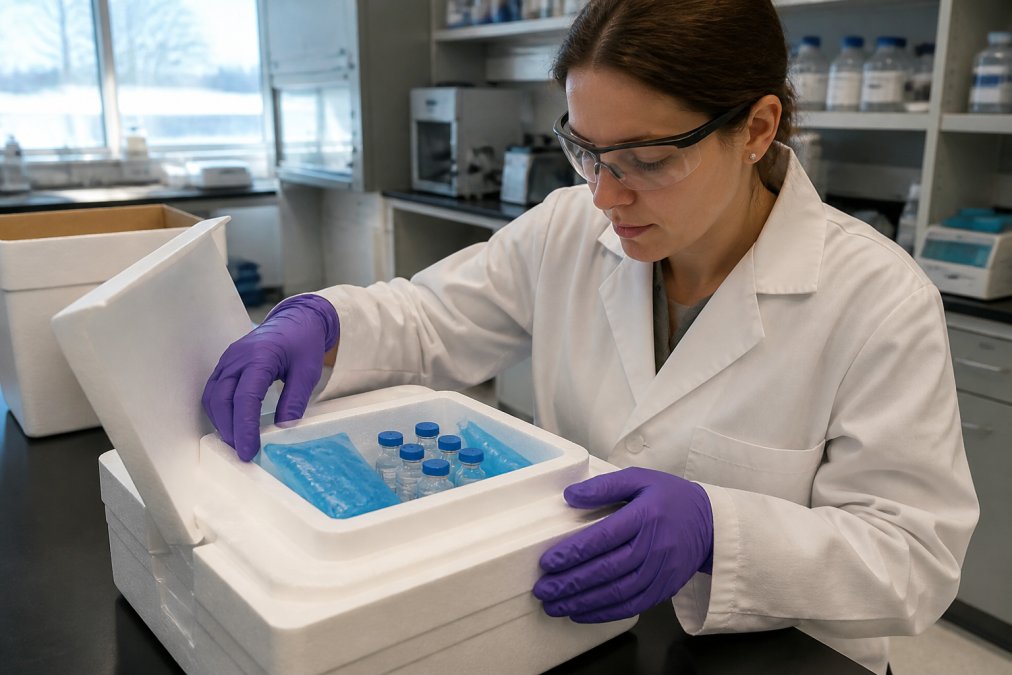
Proper cold-chain packaging typically includes insulated containers, phase-change materials, and temperature indicators. These elements add weight and volume, which can affect shipping costs and available carrier options. However, receiving a degraded compound quickly is worse than receiving a stable one a day later.
When you need temperature-sensitive compounds shipped quickly, confirm the supplier's packaging protocols handle the expected ambient conditions along the shipping route. During summer months, ground shipping across warmer regions may require additional cooling packs or expedited transit to maintain the required temperature range.
How to Choose a Reliable Peptide Supplier for Fast Delivery
Selecting a supplier who can genuinely deliver fast shipping requires looking beyond their advertised delivery promises. Start by verifying they hold appropriate inventory of the specific research compounds you need. A supplier with real-time inventory integration can confirm stock availability before you complete your order.
Regulatory compliance is another critical indicator. Suppliers who maintain rigorous third-party testing and provide certificates of analysis demonstrate a commitment to quality that extends to their handling and shipping practices. This documentation also matters for labs maintaining their own compliance standards.
For researchers needing GLP-grade compounds, documentation consistency is essential. A reliable supplier should provide the necessary paperwork for every order, ensuring your records match your materials. Frontline Peptides offers third-party tested products with certificates of analysis available before purchase.
Consider the supplier's customer support model as well. When a shipment encounters delays or damage, you need to reach a real person quickly. Suppliers with responsive support teams can resolve issues faster, potentially saving your research timeline.
Common Shipping Mistakes That Delay Your Research
Several recurring mistakes turn routine orders into delayed projects. The most common is failing to verify the supplier's shipping policies before ordering, particularly regarding hazardous materials handling and delivery windows.
Incorrect address information causes significant delays. Shipping carriers cannot redirect hazardous goods packages easily, and a wrong zip code can add days to your delivery. Double-check your shipping details, especially if you're ordering to an institutional address with specific receiving protocols.
Another frequent error is ignoring the order fulfillment cut-off times. Most suppliers ship on business days only, so an order placed Friday evening often doesn't ship until Monday. Plan your orders around these schedules, particularly before holidays or weekends when carriers operate on reduced schedules.
Chemical stability issues arise when researchers accept improper packaging to save time. A compound that arrives quickly but degraded by temperature exposure compromises your entire experiment. Always prioritize proper handling over marginal time savings.
The Overlooked Gap: Customs and Inventory Verification
Two mistakes that rarely appear in supplier FAQs but cause the longest delays are (1) assuming domestic inventory is available without checking real-time stock, and (2) underestimating customs documentation requirements for international shipments.
Real-time inventory integration is not just a convenience, it is a reliability signal. Suppliers who display live stock levels on their product pages allow you to confirm availability before you commit to an order. If a supplier only shows "in stock" without a live count, ask for confirmation in writing. A backorder discovered after checkout can add 3-7 business days to your timeline, which is often longer than the transit time itself.
Customs clearance documentation becomes critical if you order from a supplier outside the United States. Even with expedited international shipping, packages can be held at U.S. Customs and Border Protection (CBP) if the paperwork is incomplete. The following documents are commonly required for research compounds entering the United States:
- Commercial invoice - Must list the compound's chemical name, CAS number, quantity, and value.
- Safety Data Sheet (SDS) - Often requested by CBP officers to verify the substance is not restricted.
- TSCA compliance statement - For chemicals regulated under the Toxic Substances Control Act, importers must certify compliance with EPA rules.
- Importer of Record information - Your institution's tax ID or EIN may be required for customs clearance.
How to Avoid These Mistakes
- Verify stock before ordering - Use suppliers with real-time inventory systems or request written confirmation of availability.
- Prepare customs paperwork in advance - If ordering internationally, confirm the supplier includes all required documents and that your institution can serve as importer of record.
- Build in buffer time - Even with fast shipping, customs inspections and carrier delays are outside the supplier's control. A 2-day buffer can save your experiment.
By addressing these two overlooked areas, you can avoid the most common sources of delay that competitors' shipping policies rarely mention.
Fast Shipping for Laboratory Compounds: Final Checklist
Before placing your next order, use this checklist to ensure your compounds arrive promptly and in optimal condition:
- Verify the compound is in stock through the supplier's inventory system
- Confirm the order cut-off time for same-day processing
- Review the supplier's shipping policies for hazardous materials and temperature-sensitive items
- Ensure your shipping address is accurate and includes receiving instructions
- Check the expected delivery window against your research timeline
- Request certificates of analysis before purchase for quality verification
- Confirm the supplier provides shipment tracking information
- Ask about cold-chain packaging if your compound is temperature-sensitive
| Checklist Item | Why It Matters | Typical Impact |
|---|---|---|
| Inventory verification | Prevents backorder surprises | Avoids 3-7 day delays |
| Cut-off time awareness | Ensures same-day dispatch | Saves 24 hours per order |
| Shipping policy review | Avoids carrier rejections | Prevents return-to-sender issues |
| Temperature packaging | Maintains chemical stability | Protects compound integrity |
When your research timeline is tight, working with a supplier who understands these logistics makes a measurable difference. Frontline Peptides maintains U.S.-based inventory, offers competitive pricing, and provides the documentation your lab needs for compliance. Our team ships orders promptly.
Frequently Asked Questions
How fast can Frontline Peptides ship an order?
Orders placed before the daily cut-off time are typically processed for same-day shipping. Standard transit times depend on your location. Expedited delivery options are available at checkout for urgent research timelines. Real-time inventory integration means the stock shown on the product page is what is actually on hand, which avoids delays from backorders.
What is the fastest way to get research compounds delivered?
Choose expedited delivery at checkout and place your order early in the day to meet the same-day processing cut-off. Confirm the item is in stock before ordering. Fast shipping for laboratory compounds also depends on the carrier. Frontline Peptides uses temperature-controlled packaging when needed to maintain chemical stability during transit.
Are there special regulations for shipping peptides and laboratory reagents?
Yes. Shipping regulations for laboratory reagents depend on the chemical classification. Many research compounds are not hazardous, but some require GHS-compliant labeling and safety data sheets. If a product is classified as a hazardous material, carriers impose specific packaging protocols and shipping restrictions. Domestic shipping within the U.S. follows DOT rules, while international freight adds customs clearance documentation.
How can I ensure my laboratory compounds arrive safely?
Order from a supplier that uses proper packaging protocols for vials and temperature-sensitive items. Check that the supplier ships with cold-chain logistics if the compound requires it. Track your shipment and be available to receive the package on the delivery day to prevent it from sitting in extreme temperatures. Always inspect the packaging upon arrival.
Getting research compounds delivered quickly requires more than choosing the fastest courier. It demands a supplier who manages inventory accurately, packages materials correctly, and navigates shipping regulations properly. Frontline Peptides combines third-party tested products with fast shipping and responsive customer support to keep your research moving forward. Continue shopping with us and experience a shipping process designed around your laboratory's needs.