

Table of Contents
- What Makes a Lab Compound Worth Using in Research
- Best Lab Compounds for Research: Quick Comparison
- 1. BPC-157: The Versatile Peptide for Cellular Signaling Studies
- 2. TB-500: Tissue Repair and Cell Migration Research
- 3. GLP-3RT: Triple-Receptor Agonist for Metabolic Pathway Research
- 4. GLP-2TZ: Dual GIP/GLP-1 Receptor Compound
- 5. GLP-1SM: The Most Studied GLP-1 Receptor Agonist
- 6. NAD+: Cellular Energy and Mitochondrial Function Research
- How to Choose a Reliable Lab Compound Supplier
- How to Verify Peptide Purity Before You Run an Assay
- Best Practices for Lab Chemical Storage
- Regulatory Compliance and Documentation in Compound Procurement
- Budgeting and Procurement Strategies for Small Labs
- Frequently Asked Questions
Last Updated: September 26, 2026
What Makes a Lab Compound Worth Using in Research
A lab compound is worth using in research when it arrives with verified purity, a current certificate of analysis, and storage guidance that matches your experiments. Without those three things, your data is only as good as your worst vial.
At Frontline Peptides, we supply research compounds to independent labs, academic groups, and private researchers who need that traceability. The compounds below are ordered most often for tissue repair and metabolic work.
Best Lab Compounds for Research: Quick Comparison
The six compounds below cover common research categories: tissue repair, metabolic signaling, and cellular energy. Prices reflect current single-vial listings.
| Compound | Category | Primary Research Focus | Starting Price |
|---|---|---|---|
| BPC-157 | Peptide | Cellular signaling, structural interactions | $30.00 |
| TB-500 | Peptide | Tissue repair, cell migration | $48.00 |
| GLP-3RT | Peptide | Triple-receptor metabolic signaling | $40.00 |
| GLP-2TZ | Peptide | Dual GIP/GLP-1 receptor activity | $50.00 |
| GLP-1SM | Peptide | GLP-1 receptor agonist studies | $40.00 |
| NAD+ | Non-peptide | Cellular energy, mitochondrial function | $55.00 |
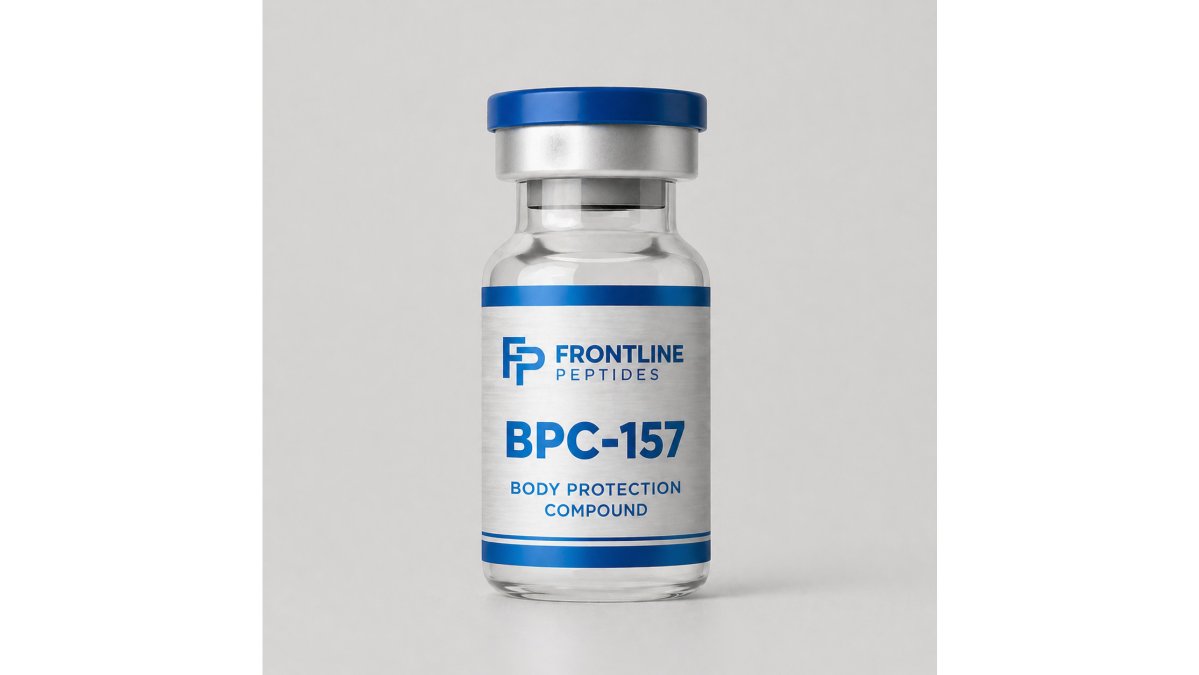
1. BPC-157: The Versatile Peptide for Cellular Signaling Studies
BPC-157 is a synthetically produced peptide fragment derived from a protein associated with gastric tissue, and one of the most widely used lab compounds for early-stage signaling work.

Researchers select BPC-157 to examine cellular signaling activity, structural and molecular interactions, and general biological response patterns. It ships as a lyophilized powder.
2. TB-500: Tissue Repair and Cell Migration Research
TB-500 is a synthetic peptide based on a portion of thymosin beta-4, investigated in cell culture and animal models for tissue repair, cell migration, blood vessel formation, and inflammatory signaling.

Research areas include soft tissue repair, wound healing, angiogenesis, and fibrosis reduction. Most findings are preclinical; human clinical data remain limited.
A common pairing is TB-500 with BPC-157 for complementary effects on tendon, ligament, and muscle models; MOTS-C and GHK-Cu pairings also appear in recovery-focused designs.
3. GLP-3RT: Triple-Receptor Agonist for Metabolic Pathway Research
GLP-3RT engages GLP-1, GIP, and glucagon pathways at the molecular level, letting you study how combined receptor activation shapes signaling dynamics within a single framework.

Multi-receptor engagement reduces the variability of running separate single-receptor assays and stitching data together later. GLP-3RT study designs typically evaluate binding interactions at multiple targets under simultaneous receptor engagement.
Supplied as a lyophilized powder, it reconstitutes with laboratory-grade solvents per your internal protocol.
4. GLP-2TZ: Dual GIP/GLP-1 Receptor Compound
GLP-2TZ is a dual-receptor agonist interacting with both GIP and GLP-1 pathways. GIP receptors appear in adipose tissue and parts of the central nervous system where GLP-1 activity is more limited, so a dual-agonist opens a broader range of targets.
The compound is a 39-amino-acid peptide supplied as lyophilized powder. Preclinical work has explored beta cell signaling dynamics, insulin response patterns, and comparative pathway activation against single-receptor compounds.
5. GLP-1SM: The Most Studied GLP-1 Receptor Agonist
GLP-1SM is a GLP-1 receptor agonist and the most extensively studied compound in its class. It mimics natural GLP-1: increasing insulin release when glucose is elevated, reducing glucagon secretion, slowing stomach emptying, and acting on appetite centers in the brain.
Research has examined it for weight and obesity models, type 2 diabetes, cardiovascular risk reduction, visceral fat reduction, fatty liver disease, insulin resistance, and metabolic syndrome. Ongoing work looks at addiction, neurodegenerative disease, inflammation, PCOS, and sleep apnea.
6. NAD+: Cellular Energy and Mitochondrial Function Research
NAD+ is a naturally occurring coenzyme studied for its role in cellular energy production, metabolic signaling, and mitochondrial function. It is the one non-peptide on this list, fitting studies needing a coenzyme rather than a receptor agonist.
Researchers use NAD+ in energy-transfer pathway analysis, mitochondrial function evaluation, oxidative stress-response work, and enzymatic signaling studies. It ships as lyophilized powder.
The NIH Office of Dietary Supplements guidance on research compounds is a useful reference point for documenting handling and storage in your lab notebook.
How to Choose a Reliable Lab Compound Supplier
A reliable supplier provides a certificate of analysis for every lot, ships third-party tested material, and answers technical questions before you order.
Ask three questions before you buy:
- Can I see the COA for the specific lot I am ordering, before payment?
- Who performed the third-party testing, and what method was used?
- What is your restock lead time if I need the same lot again in six weeks?
Third-party tested research chemicals with lot-level documentation are the baseline, not a premium feature.
How to Verify Peptide Purity Before You Run an Assay
Verifying peptide purity means matching the COA to your lot number, confirming the analytical method, and checking that the reported purity figure is supported by the chromatogram, not just stated on a summary page.
A practical verification checklist:
- Lot number on the vial matches the COA exactly
- COA lists the analytical method (HPLC or mass spectrometry)
- Chromatogram or spectrum is attached, not just a purity percentage
- Testing lab is named and independent of the supplier
- Date of analysis is within a reasonable window for your study timeline
If any box goes unchecked, request a new COA or a different lot.
Best Practices for Lab Chemical Storage
Proper storage protects the compound and your reproducibility. Lyophilized powders keep best cool, dry, and light-protected; reconstituted solutions need refrigeration or freezing depending on your timeline.
For most peptide compounds in this list:
- Dry powder: cool, dry, dark, sealed
- After reconstitution: refrigerate for short-term use
- Extended storage: freeze at approximately -20°C
- Avoid repeated freeze-thaw cycles, which degrade peptide integrity
Label everything with the reconstitution date; a vial with no date cannot be trusted in a rerun.
Regulatory Compliance and Documentation in Compound Procurement
For any compound used in a study that may face review, keep the certificate of analysis, safety data sheet, and receipt records together in one file per lot.
Certificate of Analysis (COA). A usable COA is lot-specific, not product-specific. It should state the lot number, the analytical method used (HPLC for purity, mass spectrometry for identity confirmation, often both), the measured purity figure, the testing laboratory's name, and the date of analysis. If the COA is a generic PDF that covers every lot the supplier sells, it is not a COA, it is marketing.
Safety Data Sheet (SDS). Under the OSHA Hazard Communication Standard (29 CFR 1910.1200), an SDS follows a 16-section format covering identification, hazards, composition, first-aid, fire-fighting, accidental release, handling and storage, exposure controls, physical properties, stability and reactivity, toxicology, ecology, disposal, transport, regulatory information, and revision date.
Controlled substance screening. Before ordering, confirm the compound is not listed on a DEA schedule. The DEA maintains five schedules under the Controlled Substances Act, and Schedule I materials have no accepted medical use and cannot be legally procured for research without a DEA registration.
FDA research-material framework. The FDA guidance on laboratory research materials outlines the general framework researchers should be aware of when sourcing materials for non-clinical work. Many research peptides, including Semax, are not approved for medical use, and labeling should reflect that clearly. Research-use-only (RUO) labeling is the standard designation, it tells a reviewer that the material was not intended for human or veterinary use.
Retention. Store the COA, SDS, receipt, and storage log together, indexed by lot number, so a reviewer can trace a result back to the exact vial it came from.
Build a lot-level file for every compound you order: COA, SDS, receipt, and storage log. When a reviewer or collaborator asks for provenance, you will have it in one place instead of three inboxes.
Budgeting and Procurement Strategies for Small Labs
Budgeting for research compounds comes down to three levers: order size, restock timing, and documentation overhead.
Cost per assay, not cost per vial. A $30 vial and a $55 vial are not comparable until you divide by the number of assays each supports.
Frequently Asked Questions
What are the most common research compounds used in laboratories?
Lab compounds for research include peptides like BPC-157, TB-500, and GLP-1 receptor agonists such as semaglutide and tirzepatide. Non-peptide compounds like NAD+ are also used. Researchers select these based on their stability, documented purity, and specific research applications. Frontline Peptides offers a range of these compounds, each supplied as lyophilized powder with third-party testing documentation to support reproducible experimental results.
How do you verify the purity of research chemicals?
To verify peptide purity, request a Certificate of Analysis (COA) from your supplier. The COA should include results from high-performance liquid chromatography (HPLC) and mass spectrometry, which confirm the compound's identity and purity percentage. Frontline Peptides provides these documents before purchase. You can also check for third-party testing seals and compare the COA's batch number to the vial label to ensure consistency and quality.
What should researchers look for when choosing a peptide supplier?
Look for a supplier that provides third-party tested research chemicals with accessible COAs and offers responsive customer support. Frontline Peptides meets these criteria with U.S.-based operations, fast shipping, and competitive pricing. Verify the supplier's testing process, check for transparency in documentation, and confirm they can meet your timeline and compliance needs, especially for GLP-grade or regulated research.
Are research compounds legal for laboratory use?
Research compounds are legal for laboratory use when handled by qualified researchers in controlled settings. They are not approved for human consumption. Frontline Peptides serves qualified researchers and emphasizes compliance with laboratory safety standards.
How should research peptides be stored for maximum stability?
Store lyophilized peptides in a cool, dry, light-protected environment. After reconstitution, refrigerate at 2-8°C and use within a short period. For extended storage, freeze at approximately -20°C. Follow best practices for lab chemical storage: label clearly, avoid repeated freeze-thaw cycles, and maintain a chemical inventory. Frontline Peptides recommends these conditions to preserve compound integrity and support experimental reproducibility.