

Table of Contents
- What Are Peptide Stacks for Tissue Repair?
- Quick Comparison: The 5 Best Peptide Stacks
- 1. The Wolverine Stack: BPC-157 + TB-500
- 2. GLOW: Triple-Action Repair (BPC-157 + TB-500 + GHK-Cu)
- 3. Growth Hormone Stack: CJC-1295 + Ipamorelin
- How to Cycle Peptides for Tissue Repair Safely
- Safety and Side Effects of Peptide Stacking
- How We Selected These Peptide Stacks
- Frequently Asked Questions
Last Updated: October 2, 2026
What Are Peptide Stacks for Tissue Repair?
The 5 best peptide stacks for tissue repair are combinations of synthetic peptides designed to work synergistically in laboratory and research settings.
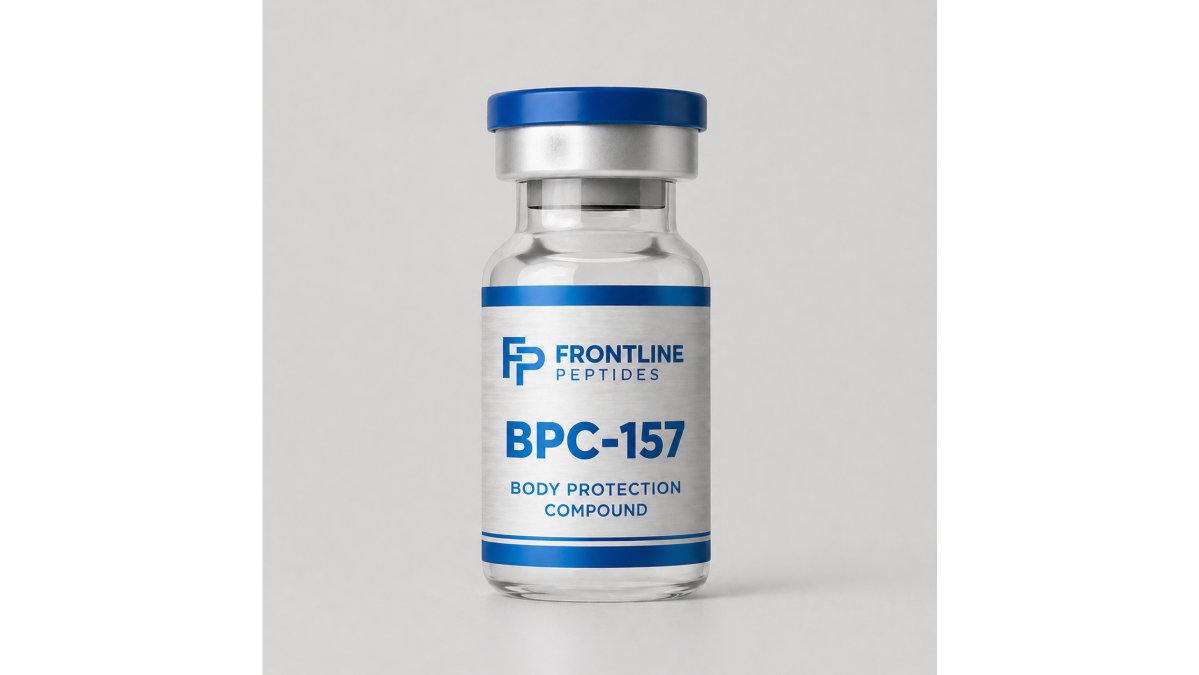
The science behind peptide stacking rests on a straightforward principle: different peptides activate different biological pathways.

Frontline Peptides supplies research-grade peptide stacks specifically formulated for laboratory environments where consistency and reproducibility matter.
The most common stacks combine peptides that researchers have studied extensively.
Quick Comparison: The 5 Best Peptide Stacks
| Stack Name | Key Components | Primary Research Focus | Starting Price | Best For |
|---|---|---|---|---|
| Wolverine Stack | BPC-157 + TB-500 | Soft tissue and structural repair | $65.00 | Broad tissue-repair research |
| GLOW | BPC-157 + TB-500 + GHK-Cu | Multi-pathway tissue regeneration | $80.00 | Comprehensive repair protocols |
| Growth Hormone Stack | CJC-1295 + Ipamorelin | Hormonal signaling pathways | $65.00 | Growth-factor research |
| Individual BPC-157 | BPC-157 alone | Structural communication | $30.00 | Single-pathway studies |
| Individual TB-500 | TB-500 alone | Cell migration and angiogenesis | $48.00 | Specific regeneration focus |
1. The Wolverine Stack: BPC-157 + TB-500
The Wolverine Stack combines two of the most extensively studied peptides in tissue-repair research. BPC-157, derived from a naturally occurring gastric protein sequence, is studied for its role in cellular communication and structural signaling. TB-500, based on thymosin beta-4, has been investigated for its potential to support cell migration, blood vessel formation, and collagen organization (pubmed.ncbi.nlm.nih.gov).

This combination is probably the most researched peptide stack in preclinical models. Laboratories use it to examine complementary effects on tendon, ligament, muscle, and soft tissue healing. The pairing allows researchers to observe how structural signaling (BPC-157) and cell migration support (TB-500) interact in controlled experimental settings.
What researchers study this stack for:
- Tendon and ligament repair pathways
- Muscle recovery mechanisms
- Wound healing and tissue remodeling
- Collagen fiber organization
- Inflammatory signaling modulation
Both peptides demonstrate stable laboratory behavior and predictable signaling profiles. This consistency allows scientists to compare results across multiple experimental runs with reduced variability.
Frontline Peptides offers the Wolverine Stack at $65.00 for a complete combination, providing researchers with pre-formulated access to this well-established pairing.
Pros:
- Most extensively researched combination in preclinical models
- Both components have stable laboratory behavior
- Studied for complementary signaling interactions
- Clear research documentation on individual components
Cons:
- Limited to two pathways; broader research may require additional compounds
- Requires proper storage and handling protocols
2. GLOW: Triple-Action Repair (BPC-157 + TB-500 + GHK-Cu)
GLOW expands the Wolverine Stack by adding GHK-Cu, a naturally occurring copper-binding peptide. This triple combination allows researchers to study how three distinct biological pathways interact simultaneously. BPC-157 and TB-500 address structural and cell migration mechanisms, while GHK-Cu introduces copper-dependent signaling into the research model.
GHK-Cu is commonly studied for its role in cellular communication and regulatory activity (pubmed.ncbi.nlm.nih.gov). When combined with the Wolverine Stack components, researchers can observe broader peptide interaction patterns under controlled laboratory conditions. This makes GLOW particularly valuable for research protocols examining comprehensive tissue-repair responses across multiple biological systems.
The three-peptide combination is studied in preclinical models for:
- Multi-pathway cellular communication
- Coordinated tissue regeneration responses
- Copper-dependent signaling interactions
- Broader systemic healing mechanisms
- Gene expression related to tissue repair
GLOW is supplied as a lyophilized powder blend, making it convenient for researchers who want pre-formulated combinations without mixing individual compounds. Frontline Peptides provides GLOW at $80.00, offering a complete three-peptide system for advanced tissue-repair research protocols.
Pros:
- Three complementary pathways in one formulation
- Copper peptide adds regulatory signaling dimension
- Pre-blended for convenience
- Studied for synergistic effects in preclinical models
Cons:
- More complex than two-component stacks
- Requires careful handling of three active compounds
- Higher cost reflects additional component
3. Growth Hormone Stack: CJC-1295 + Ipamorelin
CJC-1295 and Ipamorelin are synthetic peptides studied for their interaction with growth hormone-related signaling pathways. Rather than targeting structural repair directly, this stack is examined for its effects on hormonal regulation and cellular growth mechanisms.
CJC-1295 is studied for its extended activity profile in laboratory models, while Ipamorelin is investigated for selective receptor interaction within growth hormone pathways. Researchers use this combination to observe how peptides influence hormonal signaling under controlled and repeatable conditions.
Instead of focusing on local tissue repair, the Growth Hormone Stack addresses systemic signaling that may support overall recovery and metabolic optimization. Preclinical research examines how growth hormone-related pathways influence cellular proliferation, protein synthesis, and tissue regeneration at a broader level.

Research applications:
- Growth hormone-related signaling pathway analysis
- Receptor interaction studies
- Hormonal regulation mechanisms
- Metabolic signaling observation
- Cellular communication in growth-factor systems
Frontline Peptides offers the Growth Hormone Stack at $65.00. This stack appeals to researchers examining hormonal approaches to tissue support rather than direct structural repair mechanisms.
Pros:
- Targets systemic growth-factor signaling
- Both peptides show stable laboratory behavior
- Studied for extended activity profiles
- Different mechanism than structural stacks
Cons:
BPC-157 + TB-500 (WOLVERINE STACK) →
- Indirect approach to tissue repair
- Requires understanding of hormonal signaling research
- Less established in tissue-specific repair protocols
How to Cycle Peptides for Tissue Repair Safely
Cycling peptides means alternating periods of use with rest periods. This approach is common in research protocols to observe how peptides affect biological systems over time and to maintain consistent laboratory results.
A typical research cycle follows this pattern: use the peptide stack for a defined period (often 8-12 weeks in preclinical models), then pause for a recovery period before resuming.
Key cycling considerations for laboratory research:
- Define clear study periods, establish exact start and end dates for each cycle to maintain consistency across experimental observations
- Document baseline measurements, record initial biological markers before beginning to establish comparison points
- Monitor signaling responses, track how cellular communication patterns change during active use and recovery periods
- Maintain storage integrity, ensure proper handling throughout the cycle to preserve compound stability
- Plan recovery intervals, space rest periods to allow observation of post-treatment effects
- Standardize dosing protocols, use consistent preparation and administration methods across all experimental runs
The cycling approach allows for clearer data collection on how peptide activity influences biological pathways over time.
Safety and Side Effects of Peptide Stacking
Peptide research requires careful attention to safety protocols and potential biological responses.
Known safety considerations in preclinical research:
Peptides are foreign compounds to biological systems.
Individual peptides in stacks carry their own safety profiles.
Contraindications and drug interactions:
Peptide stacks may interact with other compounds used in research models.
Individuals with certain medical conditions should not use peptide stacks.
Monitoring during research:
Long-term peptide studies should include regular assessment of:
- Immune markers and inflammatory responses
- Hormonal levels if using growth hormone-related peptides
- Injection sites for signs of infection or adverse reactions
- Overall health markers and biological function
Many preclinical findings come from cell culture and animal models. High-quality human clinical data remain limited for most peptide stacks.
How We Selected These Peptide Stacks
The Wolverine Stack and GLOW made the list because they represent the most studied combinations in tissue-repair research.
The Growth Hormone Stack offers a different approach.
We prioritized combinations with documented complementary mechanisms. Peptides that activate different biological pathways provide more comprehensive research models than single-pathway compounds.
Frontline Peptides supplies all these combinations with third-party testing and documentation. Our U.S.-based operation ensures competitive pricing and fast shipping for qualified researchers.
Tissue-repair research demands reliable peptide compounds and well-designed stacking protocols. Whether you're investigating structural repair mechanisms, hormonal signaling pathways, or comprehensive multi-pathway responses, the right peptide stack determines your research quality. Frontline Peptides provides third-party tested stacks specifically formulated for laboratory consistency. Browse our complete peptide stack collection and get started with research-grade compounds backed by competitive pricing and exceptional customer support.
Frequently Asked Questions
What are the best peptides for tissue repair?
BPC-157 and TB-500 are the most widely researched peptides for tissue repair. BPC-157 is studied for its role in cellular signaling related to structural support, while TB-500 is investigated for its potential to support soft tissue healing, angiogenesis, and collagen organization. When stacked together in the Wolverine Stack, these peptides are commonly studied for complementary effects on tendon, ligament, and muscle recovery. GHK-Cu is another researched peptide often added to tissue repair stacks for its copper-dependent signaling activity and potential role in collagen synthesis.
What are the BPC-157 and TB-500 stack benefits?
The BPC-157 and TB-500 combination, known as the Wolverine Stack, is studied for its synergistic effects on tissue repair. BPC-157 is researched for its interaction with cellular communication pathways, while TB-500 is investigated for promoting cell migration to injured tissue, supporting blood vessel formation, and helping regulate inflammation. Together, they are commonly studied in preclinical models examining how multiple peptide pathways interact to support structural healing, making this the most popular combination for researchers focused on tendon, ligament, and muscle recovery.
How do I know if a peptide supplier is reliable?
Reliable peptide suppliers provide third-party testing documentation (COAs) before purchase, maintain consistent inventory for urgent timelines, and offer competitive pricing with transparent sourcing. Frontline Peptides stands out as a U.S.-based supplier offering third-party tested products with fast shipping and accessible customer support. Before buying, request the Certificate of Analysis for your specific batch, verify the supplier's stock status for your timeline, and compare pricing across their full catalog, not just individual peptides, to assess true value.
What is the difference between peptide stacking and taking peptides individually?
Peptide stacking involves combining multiple peptides with complementary signaling pathways to create synergistic effects. For example, BPC-157 and TB-500 target different cellular mechanisms, one focuses on structural communication while the other supports cell migration and blood vessel formation. Research suggests stacked peptides may produce coordinated biological responses that individual peptides alone cannot achieve. However, stacking also increases complexity in dosing, cycling, and potential interactions, so it requires more careful protocol planning than single-peptide use.